
Low-pressure treatment • Asphalt-shingle roofs
Roof Moss Treatment in Invermere & the Columbia Valley
Protect your asphalt-shingle roof with a careful, multi-stage process designed to arrest moss and lichen growth—without aggressive pressure washing or forcing established material from beneath the shingles.
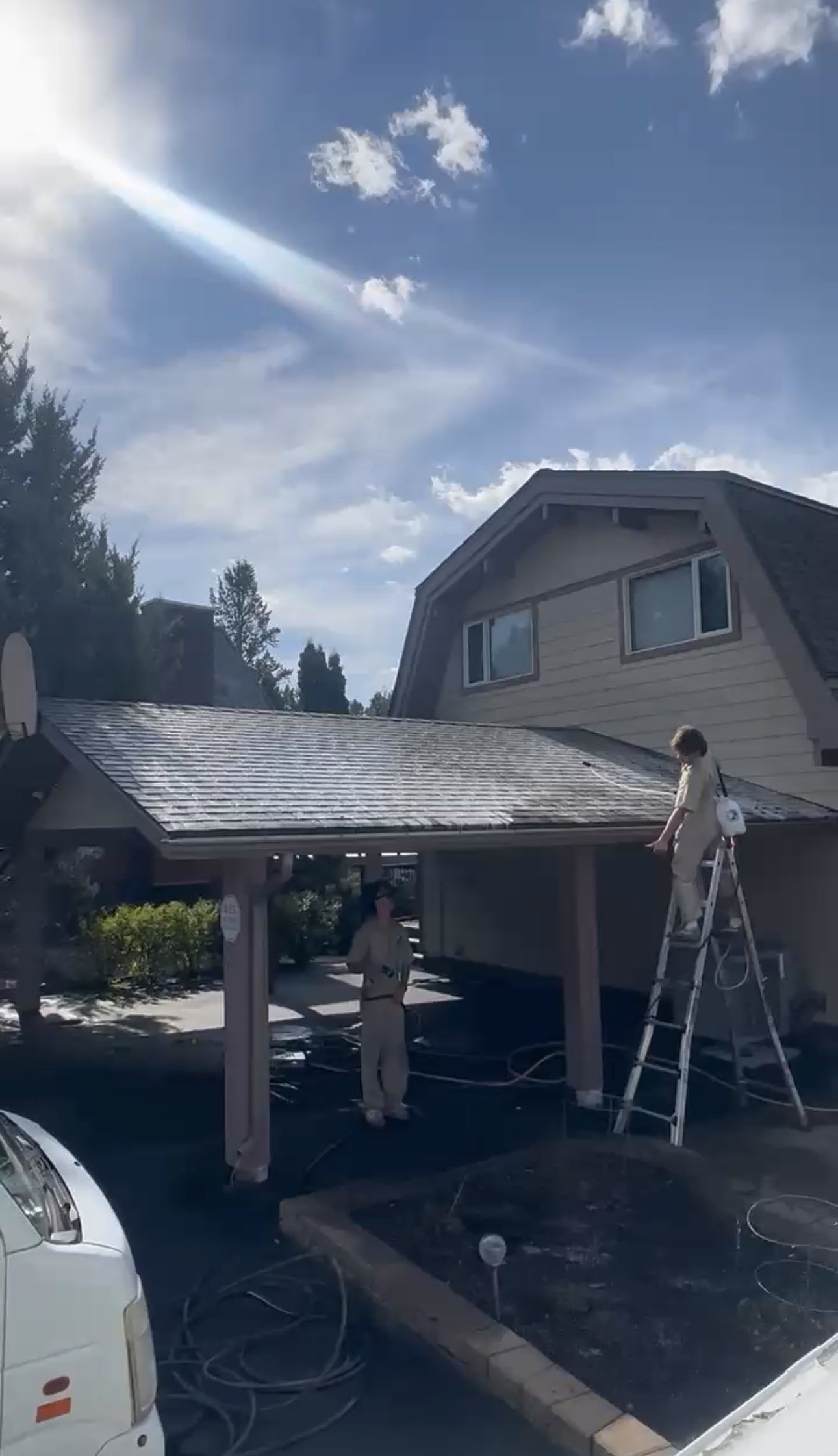
Treat the growth. Protect the roof.
Roof moss is not ordinary surface dirt
Moss and lichen thrive where roof sections remain shaded, damp, or sheltered by nearby trees. Over time, dense growth can hold moisture against the roof and become established around or beneath shingle edges.
That does not mean it should be blasted away. Asphalt shingles depend on their protective granules and overlapping edges. Excessive pressure, stiff brushing, and aggressive scraping can damage the roofing material while chasing an immediate cosmetic result.
Valley Shiners approaches these projects as roof treatments rather than instant makeovers. We focus on stopping the organic growth first, then allowing dead material to loosen and release through normal weathering.
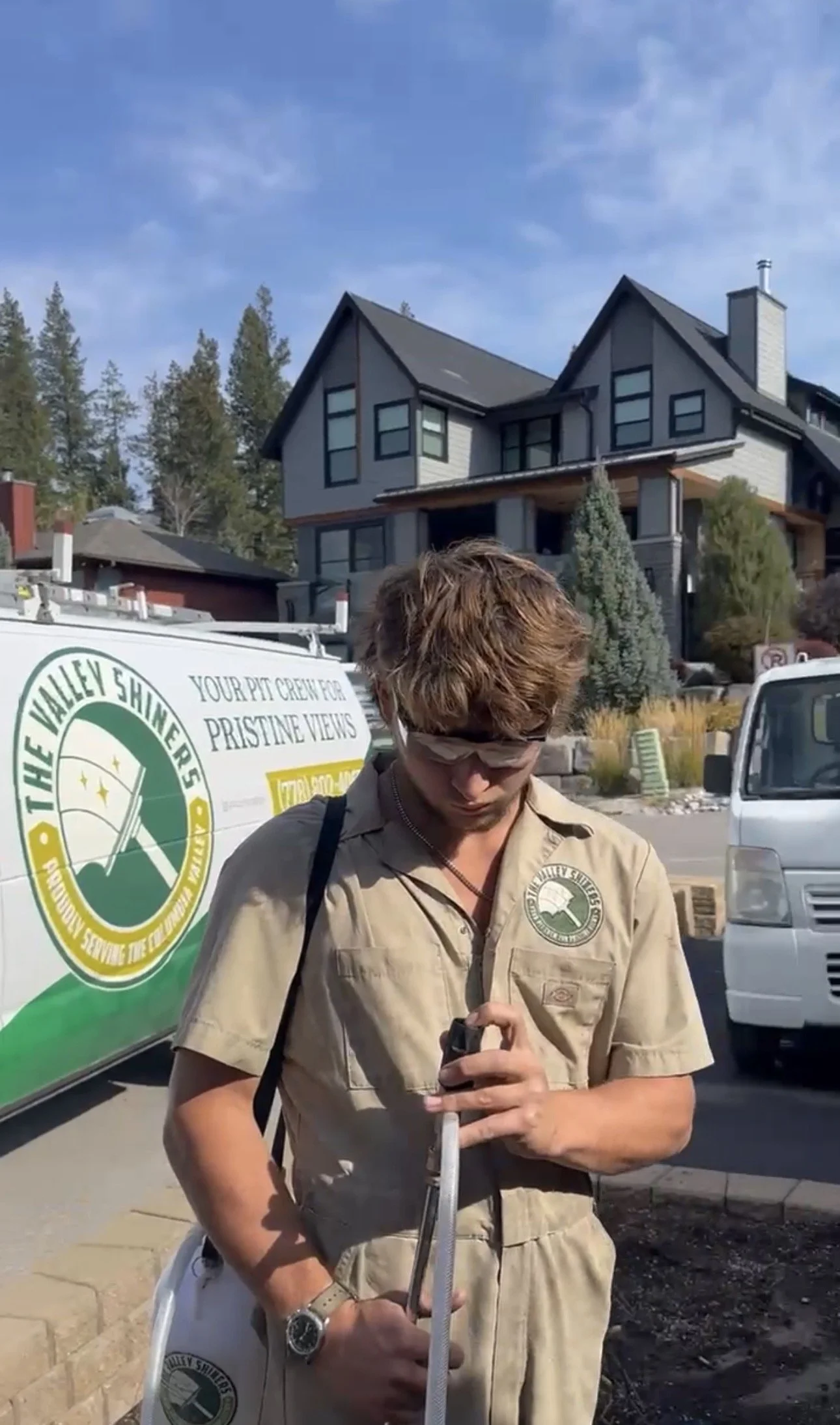
A more responsible approach
Built around the condition of your roof
Every project begins with an assessment. The treatment scope depends on the roof material, severity and location of growth, access conditions, surrounding surfaces, and whether the work can be completed without exceeding a responsible exterior-cleaning scope.
Targeted treatment
If growth is concentrated on shaded or moisture-retaining sections, we can focus on the affected areas rather than automatically treating the entire roof.
Roof-conscious methods
Our process relies on controlled application and limited safe agitation—not aggressive pressure washing against asphalt shingles.
Managed follow-through
Established growth may require inspection, a targeted second application, or a later verification visit. We set that expectation before work begins.
What to expect
Our six-stage roof moss treatment process
Successful treatment is a progression. The moss may begin dying quickly, but the complete visual change develops as treated material dries, deteriorates, and releases from the shingles over time.
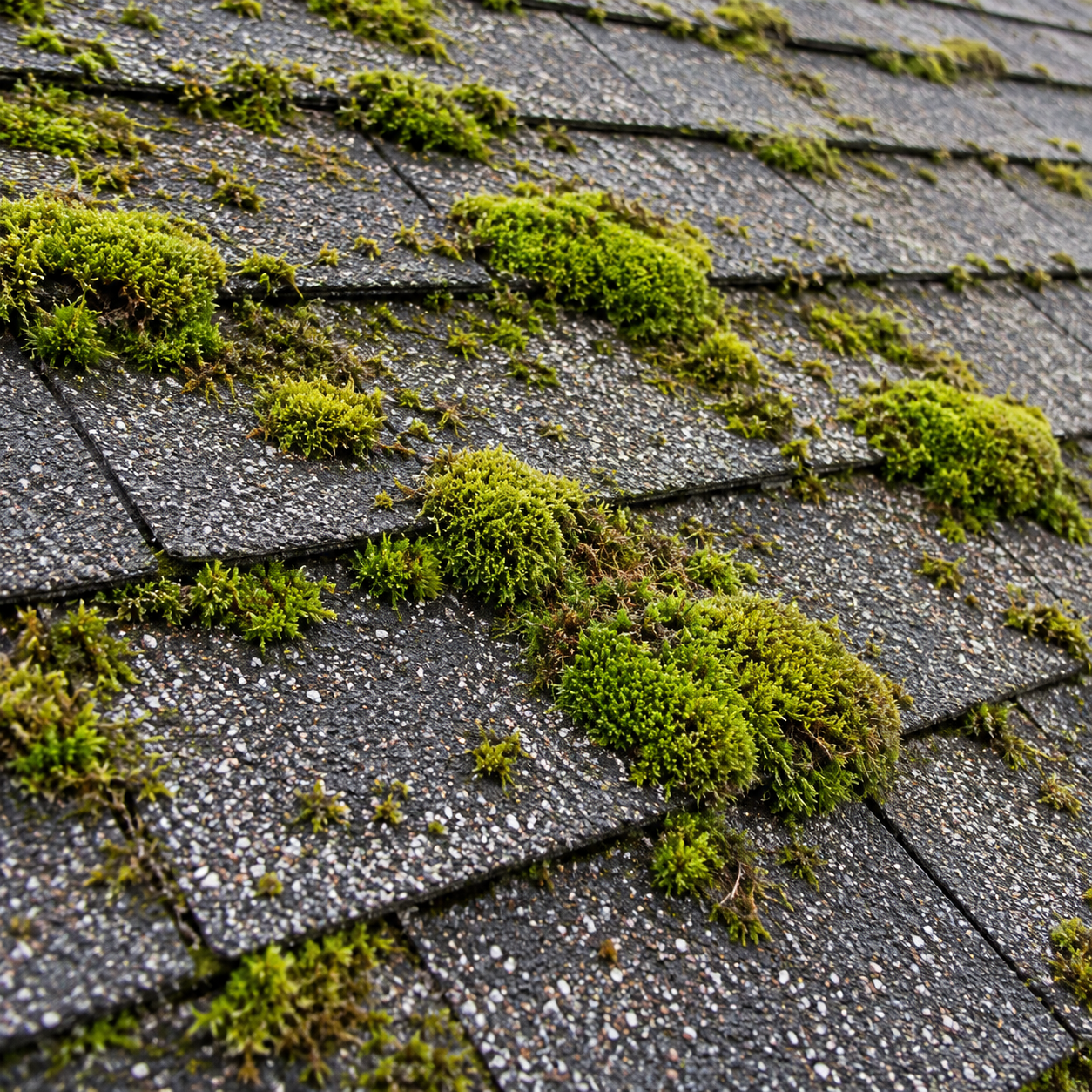
Assess the growth
We identify where moss and lichen are active, how deeply they are established, and which sections can be treated safely.
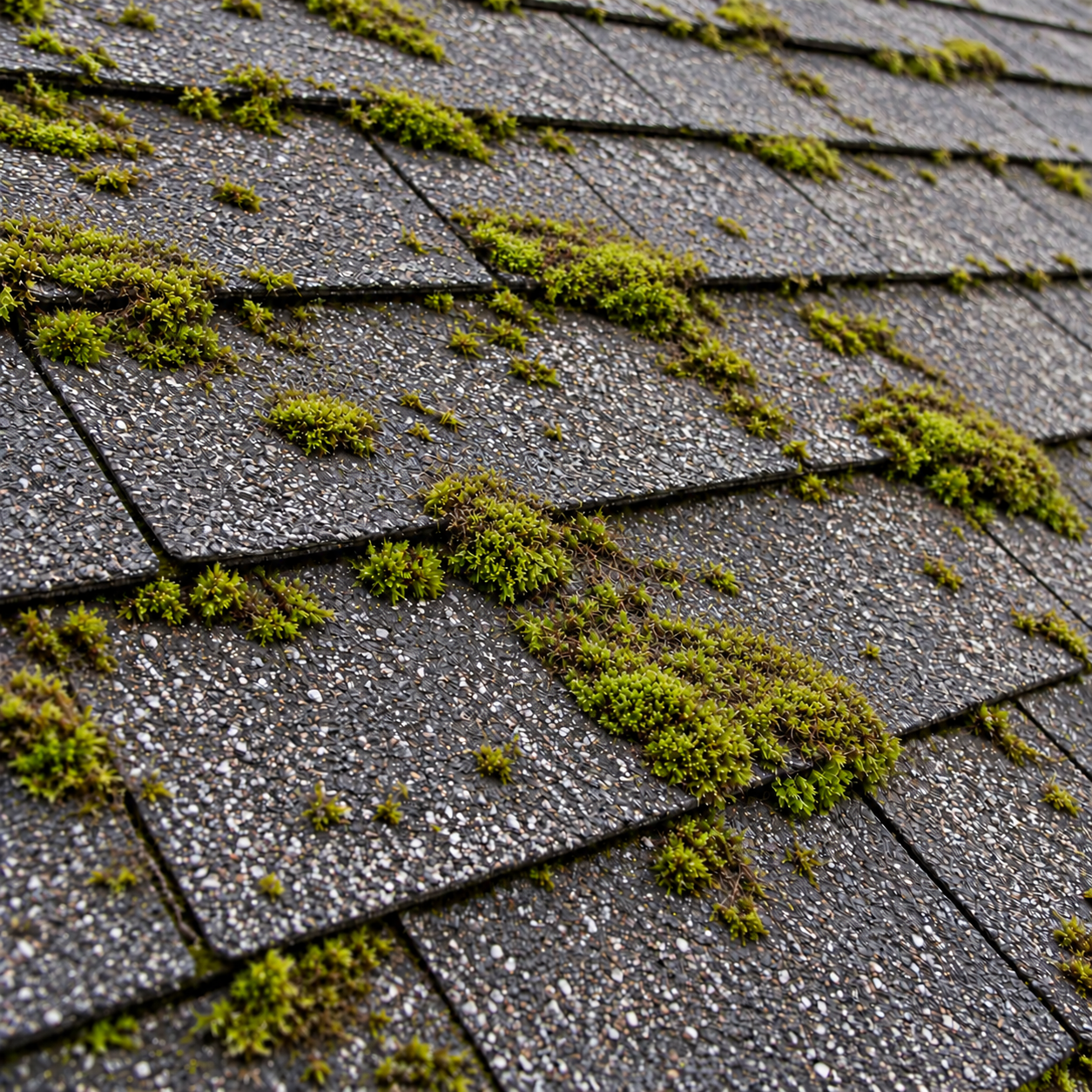
Prepare the area
Loose debris may be removed where it releases safely. Surrounding siding, decks, landscaping, and runoff areas are considered before application.
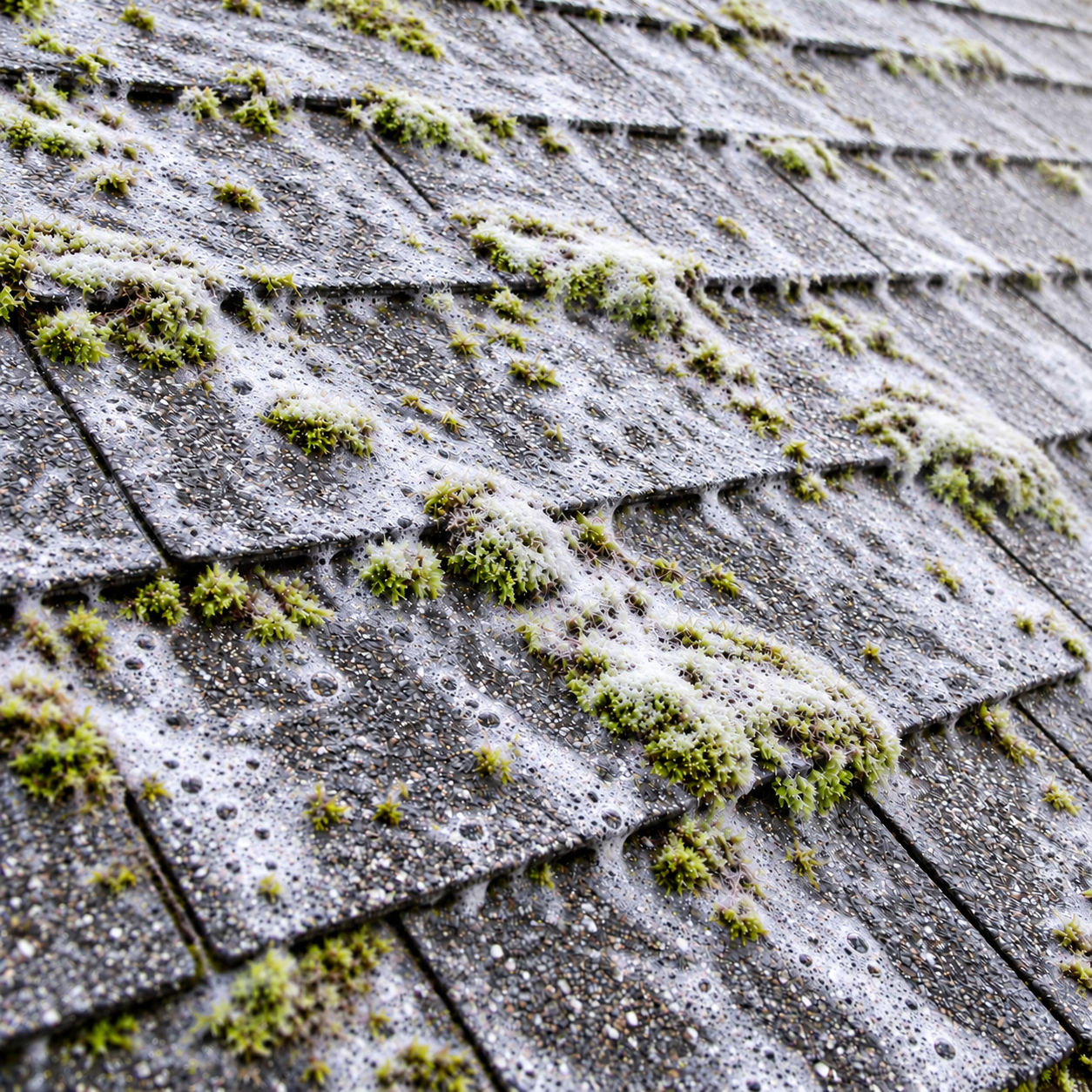
Apply treatment
A controlled, low-pressure application is directed to the affected growth without treating the roof like a conventional pressure-washing surface.
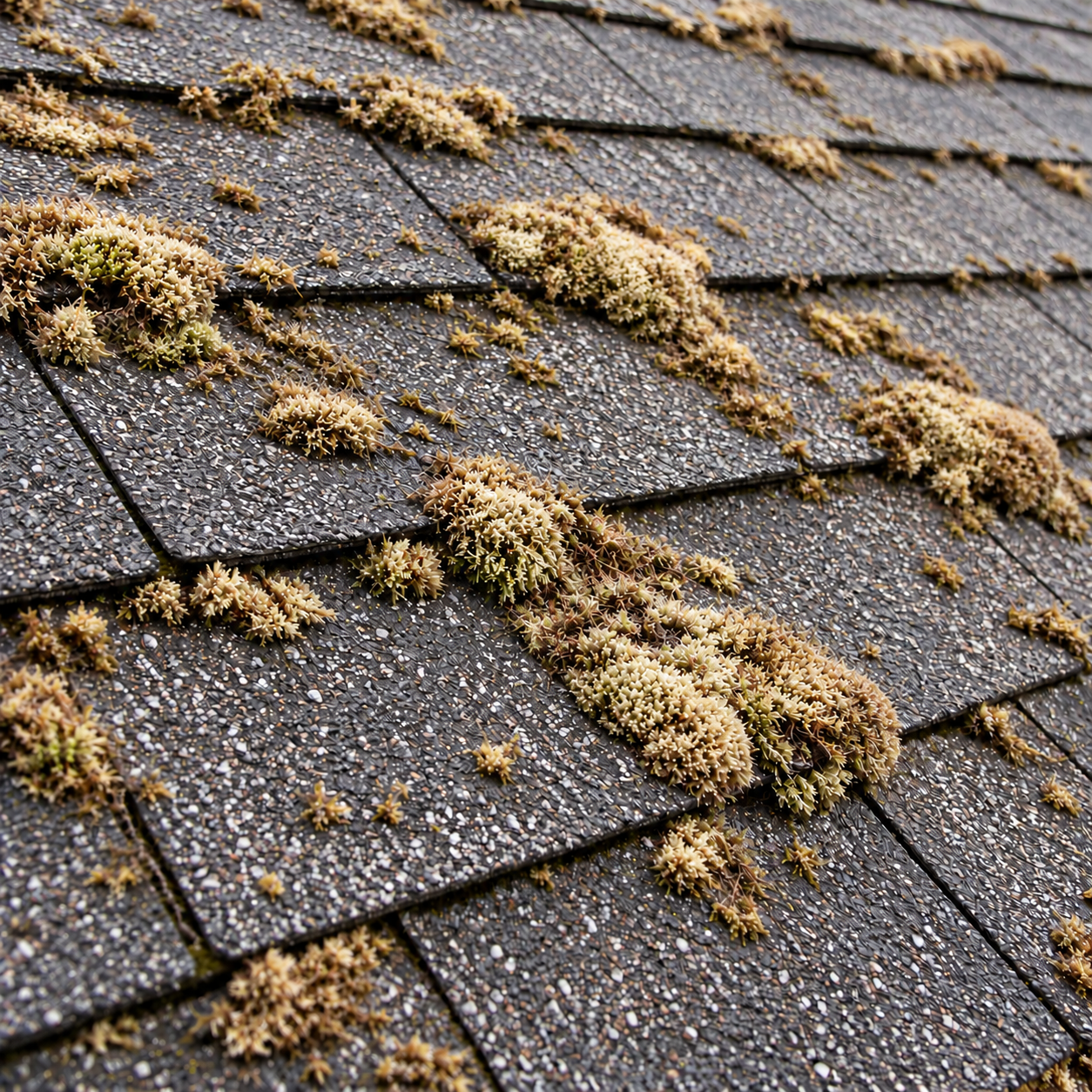
Visible die-off begins
Treated material may turn pale, white, grey, tan, or brown as it loses density and begins deteriorating.
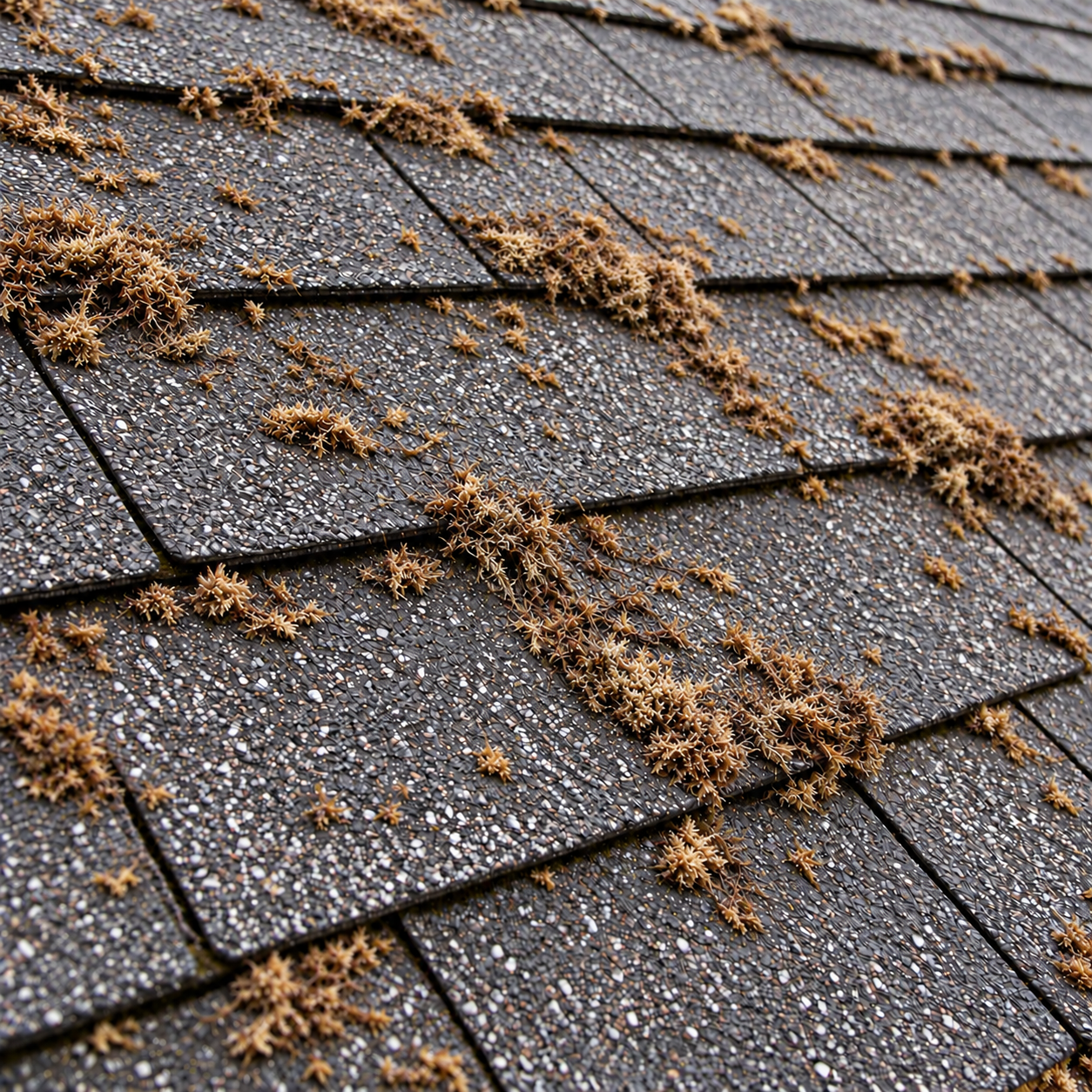
Nature releases it
Rain, wind, snow, and freeze-thaw cycles help loosen dead organic material over the following weeks or months.
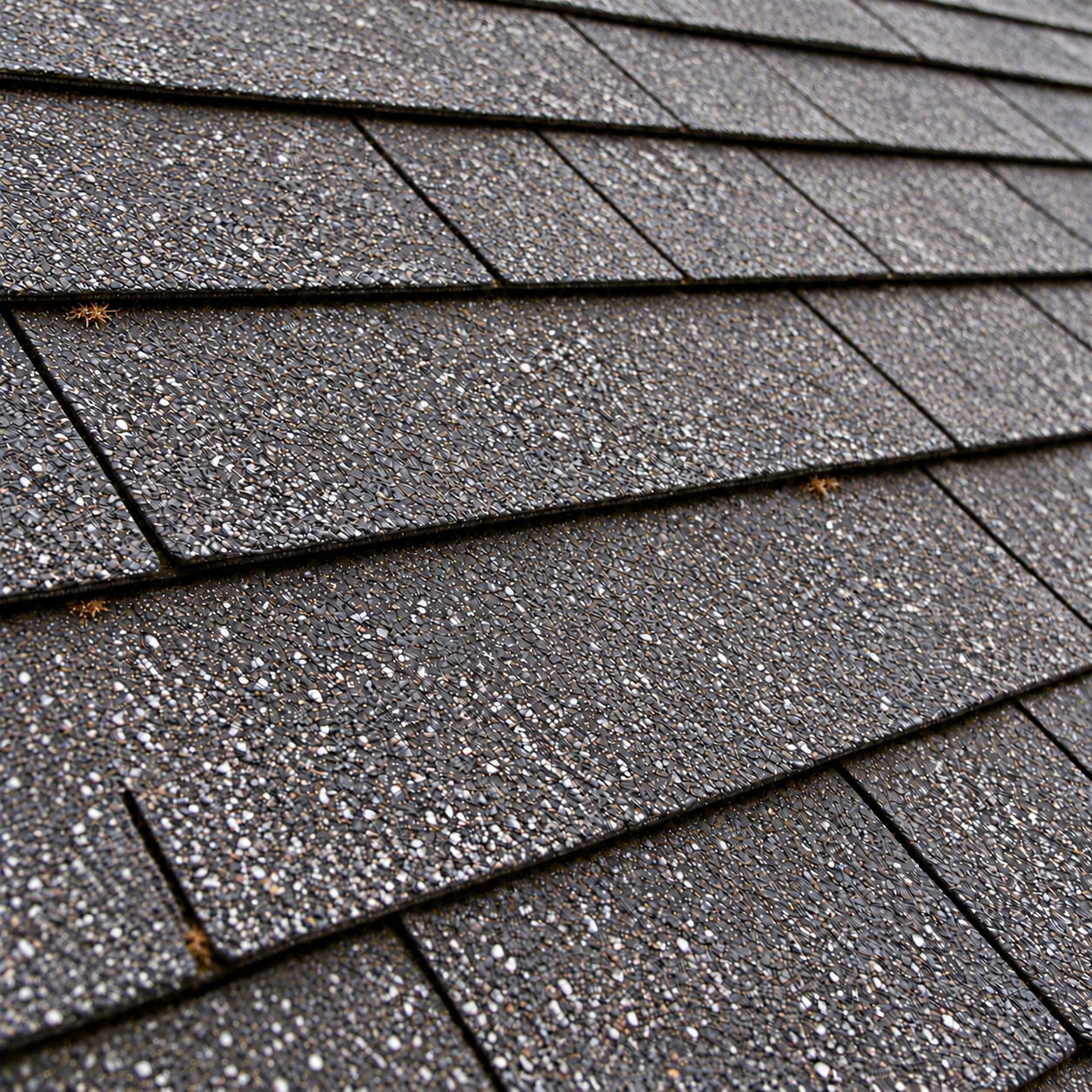
Verify the result
A later inspection can confirm whether growth remains inactive and identify isolated areas that may need further treatment.
Illustrative treatment progression. Actual timing and appearance vary according to moss depth, roof condition, roof exposure, and seasonal weather.
Not an instant makeover
What happens after treatment?
The biological response and the cosmetic result happen on different timelines. Moss can be dead while it remains visible and attached to the roof.
The affected sections are prepared and treated at low pressure.
Colour and texture changes may begin as active growth deteriorates.
Normal weather gradually loosens and releases dead material.
The roof can be reinspected and remaining living growth treated where appropriate.
Local project profile
A multi-stage treatment in Terravista
A Windermere homeowner contacted Valley Shiners about significant moss and lichen affecting targeted sections of an asphalt-shingle roof. Some of the heaviest growth had become established beneath the shingle edges.
We completed an initial treatment, returned approximately one week later to inspect the response, and observed substantial visible die-off. Several heavily affected areas received a targeted second application.
The roof is now being allowed to weather naturally, and the homeowner is already confirmed for a spring inspection so we can verify the long-term result.
Read the complete case study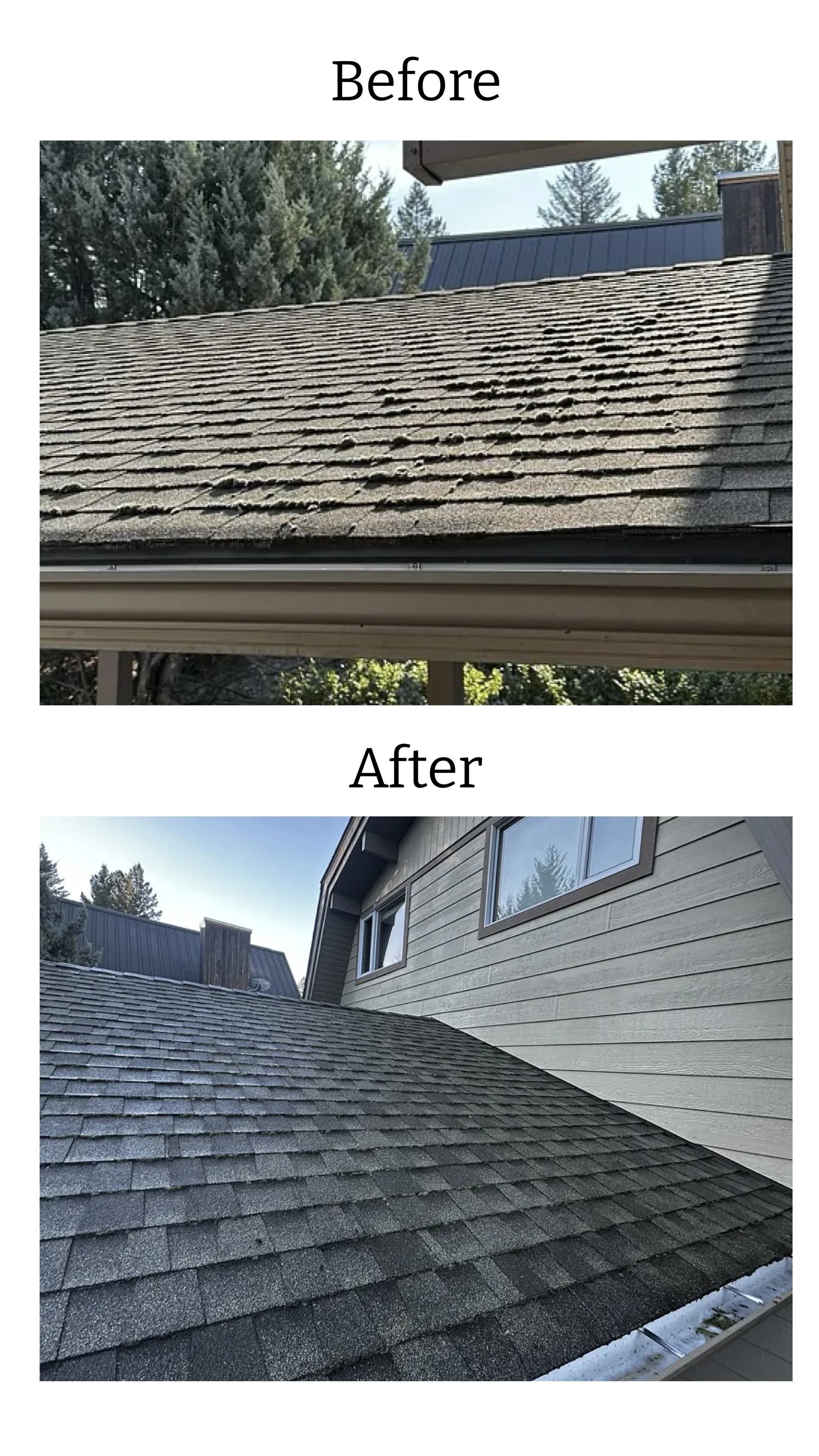
Clear scope. Honest limits.
Is your roof a good candidate?
Roof moss treatment is a cleaning and maintenance service. It does not replace roofing inspection, repair, or replacement when the underlying material has failed.
Treatment may be suitable for
- Localized or widespread moss on asphalt shingles
- Lichen and other visible organic buildup
- Shaded or moisture-retaining roof sections
- Growth that requires a staged rather than aggressive approach
- Accessible areas that can be serviced responsibly
A roofer should assess
- Active leaks or suspected water intrusion
- Loose, curling, missing, or badly deteriorated shingles
- Soft roof decking or structural concerns
- Roofing near the end of its service life
- Repairs required after the growth is treated
Locally owned in the Columbia Valley
Roof moss treatment near Windermere, BC
Valley Shiners assesses suitable residential roof moss treatment projects throughout the Columbia Valley. Availability depends on roof material, access, condition, and treatment scope.
Common questions
Roof moss treatment FAQs
Should moss disappear immediately after treatment?
No. Treated moss may begin changing colour and deteriorating relatively quickly while remaining physically attached to the shingles. Normal rain, wind, snow, and freeze-thaw cycles can help release the dead material over the following weeks or months.
How can I tell whether the treatment is working?
Moss may become pale green, white, grey, yellow, tan, or brown. It can also lose density, become brittle, or visibly collapse. Those changes may indicate die-off even when the material remains visible.
Can moss be pressure washed from asphalt shingles?
Aggressive pressure washing is generally not our approach for asphalt shingles. Excessive pressure can dislodge protective granules, disturb shingle edges, drive water beneath roofing material, and accelerate wear.
Why might established moss need a second treatment?
Dense growth can contain overlapping layers or protected material beneath shingle edges. A follow-up inspection allows remaining active areas to be treated selectively instead of applying an unnecessarily aggressive process everywhere.
Does the entire roof need to be treated?
Not always. When growth is concentrated in particular shaded or moisture-retaining areas, a targeted treatment may be appropriate. The scope should reflect the actual distribution of growth, roof condition, and safe access.
Will moss treatment repair roof damage?
No. Treatment can address organic growth, but it cannot replace missing granules, reseal shingles, repair leaks, or reverse pre-existing deterioration. Roofing defects should be assessed by a qualified roofing contractor.
How long does the natural-release stage take?
The timeline depends on moss depth, roof pitch, shade, moisture, seasonal weather, and the condition of the shingles. Light material may release relatively quickly, while dense growth established beneath shingle edges can take several months.
How do I request an assessment?
Send us your property location, photographs showing the affected roof sections, and any known access or roof-condition concerns. We can determine whether the project appears suitable for treatment and whether an onsite assessment is required.
Request an assessment
Tell us what is growing on your roof
Share your property location, contact information, and a few photographs if available. We will review the visible growth, roof type, and access conditions before recommending the next step.